Customer retention strategies have become one of the biggest competitive advantages for Retail Brands in 2026. Acquiring a new customer costs 5 to 7 times more than keeping an existing one. That’s not a new stat but it hits differently when you’re watching repeat purchase rates drop and churn tick upward quarter after quarter.
Here’s the uncomfortable truth most retail teams already know but rarely say out loud: a lot of retention efforts are just recycled discount programs wearing a new name. “Loyalty” that only fires on birthdays. Win-back campaigns that go out to every lapsed customer regardless of why they left. Personalization that’s really just “Hi, [First Name].”
2026 is different. Customers have more options, shorter patience, and a sharper eye for what’s genuine versus what’s automated noise. The Brands that retain customers this year are the ones treating retention as a relationship discipline, not a campaign mechanic.
These customer retention strategies help Retail Brands increase repeat purchases, reduce churn, and improve long-term customer loyalty. This blog breaks down 12 strategies that actually work with notes on how to apply each one.
1. Customer Retention Strategy #1: Build a loyalty program that rewards behaviour, not just purchase amount
Most loyalty programs are points-for-purchases engines. That’s fine, but it only captures one dimension of customer value. Customers who feel seen beyond their wallet tend to stick around longer.
Behavioural loyalty means rewarding actions like writing a review, referring a friend, completing a profile, or visiting a store during a slow period. These micro-moments build habit loops. When someone earns points for something other than spending, the program starts to feel less transactional.
This is exactly where Zence Loyalty Management comes in. It lets Retail Brands design tiered, behaviour-driven reward programs that go beyond point accumulation, think milestone rewards, referral triggers, and category-specific incentives that are tied to actual customer profiles, not just transaction history.
Worth noting: The tier structure matters more than the reward value itself. Moving from Silver to Gold should feel achievable, and meaningful.

2. Customer Retention Strategy #2: Personalize at the segment level, not just the surface level
There’s a version of personalization that’s theatre. The customer’s name in the subject line. A “You might also like” block at the bottom of a receipt email. These don’t move the needle.
Real personalization starts with knowing why a customer buys from you, their category preference, purchase cadence, channel behaviour, and what typically triggers their next visit. When you know those things, you stop guessing and start sending the right message at the right time.
Zence Customer Data Platform (CDP) unifies data from in-store, online, and app touchpoints into a single customer view. That 360-degree profile is what separates actual personalization from name-in-subject-line theatre. Segment by purchase frequency, lifetime value, preferred channel, or lapsed date, and then build campaigns around those real signals.
3. Customer Retention Strategy #3: Fix your post-purchase experience before it becomes a churn driver
The window right after a purchase is one of the most underused retention opportunities in retail. Most Brands send a confirmation email and go quiet. That silence gets filled by the customer’s doubts, return anxiety, or a competitor’s retargeting ad.
A strong post-purchase journey does three things: confirms the decision, manages expectations, and opens the door to the next visit. Order updates, care instructions, usage tips, community access, review requests, all of these, when timed right, turn a single transaction into a relationship opener.
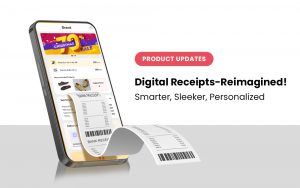
Zence Digital Receipt feature is a small but powerful piece of this. Instead of a dead-end paper receipt, customers get a digital touchpoint that can include personalized product tips, loyalty point balances, and a nudge toward their next purchase.
4. Customer Retention Strategy #4: Identify at-risk customers before they leave not after
The biggest mistake in retention is running win-back campaigns after customers have already churned. By that point, you’re fighting uphill. The smarter play is catching the signals early.
Customers often show warning signs weeks before they go silent, declining purchase frequency, dropping email open rates, a single poor service interaction, one cart abandonment without follow-up. These signals exist in your data. The question is whether your systems are reading them.
With Zence Segmentation tools, you can build at-risk audiences based on behavioural patterns, days since last purchase, open/click drop-off, ticket resolution history, and trigger proactive outreach before those customers mentally move on.

5. Customer Retention Strategy #5: Use win-back campaigns with a clear reason to come back
When a customer has already lapsed, the standard “We miss you! Here’s 10% off” email rarely lands. Partly because everyone sends it. Mostly because it gives no reason for the customer to believe anything has changed.
Effective win-back campaigns acknowledge the gap, offer something relevant, and make it easy to take the next step. That means using what you know about them, last category purchased, average order value, channel preference, rather than sending the same message to everyone who hasn’t bought in 90 days.
A good win-back sequence typically has three moments: a soft re-introduction, a value-led offer, and a final urgency message. Keep the stakes low at first. The goal is a click, not a conversion, trust needs to be rebuilt before a purchase decision happens.
6. Customer Retention Strategy #6: Make your feedback loop visible
Customers stop sharing feedback when they believe nothing will change. And honestly? That belief is usually earned. A one-time NPS survey that disappears into a report no one reads is not a feedback culture, it is a checkbox.
What builds trust is closing the loop. When a customer flags an issue and then receives an acknowledgment, or better, sees that the issue was fixed, that interaction becomes a retention moment in itself. “They actually listened” is a powerful sentence.
Zence Feedback Management module collects real-time customer sentiment across touchpoints and feeds it into a ticketing system so issues don’t fall through the cracks. For Retail Brands running multiple stores or channels, that kind of visibility isn’t optional, it’s the difference between a recoverable complaint and a churned customer.

7. Customer Retention Strategy #7: Automate the right moments, not just the obvious ones
Marketing Automation in retail has a ceiling problem. Most Brands automate the obvious, welcome emails, birthday offers, cart abandonment nudges. These are table stakes now. Where the real retention lift happens is in the less obvious automations: the ones triggered by behavioural signals most teams miss.
Think about automating a “we noticed you haven’t redeemed your points” message three days before they expire. Or a restock alert for a category a customer buys every 45 days. Or an anniversary-of-first-purchase note that feels personal, not promotional.
Zence Marketing Automation lets teams build these kinds of journey-based triggers, not just time-based campaigns, using actual customer behaviour as the input signal. The result is communication that lands at the right moment rather than the scheduled one.
8. Customer Retention Strategy #8: Reward referrals the right way
Referred customers have higher lifetime value and lower acquisition cost than almost any other source. But most referral programs are set up to reward the referrer once and ignore everything after.
The best referral loops reward both parties and create a reason to refer repeatedly. This means moving away from a one-time “give ₹200, get ₹200” mechanic toward something that builds into your broader loyalty structure, tiered referral rewards, public recognition, or bonus points for customers who refer into a specific category.
The other thing worth flagging: referrals work best when the referring customer has already had a great experience. If you’re pushing referrals before the post-purchase experience is solid, you’re just accelerating word-of-mouth about mediocre service.

9. Customer Retention Strategy #9: Train your in-store staff as retention assets
This one rarely appears in retention strategy lists, and that’s a mistake. In-store staff are your highest-leverage retention touchpoint. A genuinely helpful interaction at the shelf, a remembering of a previous preference, a graceful handling of a complaint, these create emotional loyalty that no digital campaign can replicate.
The challenge is that most CRM data lives in the back office, not at the point of conversation. Staff can’t personalize what they can’t see.
Tools that surface customer history at the point of interaction, loyalty tier, last purchase, open service tickets, turn every in-store conversation into a retention opportunity. When a customer walks in and the staff already knows they’re a top-tier member who had a return issue last month, the interaction changes completely.
10. Customer Retention Strategy #10: Segment your strategy by CLV
Not every customer deserves the same retention investment. A customer who has spent ₹50,000 over three years and one who made a single ₹300 purchase need fundamentally different approaches, same budget applied to both is just waste.
High-LTV customers warrant white-glove treatment: exclusive previews, direct access to support, personalized outreach from actual humans. Mid-tier customers are your growth segment, they need nudges that move them up, not just maintenance. Low-frequency customers may respond to reactivation campaigns or are simply better left to organic re-engagement.
Zence RFM-based segmentation helps Retail Brands build these tiers automatically and keep them updated as customer behaviour changes, so you’re not still treating a high-churn-risk customer like a loyal one just because they were one 18 months ago.

11. Customer Retention Strategy #11: Recover abandoned carts with context, not just urgency
Cart abandonment recovery is everywhere. And yet most abandoned cart emails read identically: “You left something behind! Here’s your cart.” Then a timer. Then another email that’s slightly more desperate.
The problem isn’t the follow-up, it’s that it ignores context. Why did the person leave? Was it price? Distraction? A shipping cost surprise? Lack of trust at checkout? The answer to that question changes everything about how you recover the cart.
A customer who’s been browsing for 20 minutes and added three items before leaving is different from someone who bounced in two minutes. The first deserves a thoughtful nudge, maybe with a product detail that removes doubt. The second might not be the right audience at all.
Zence Abandoned Cart Recovery goes beyond the basic trigger to use customer profile data in the recovery message, loyalty status, past purchase history, preferred channel, so the outreach feels like a continuation of a relationship, not a generic alarm bell.
12. Customer Retention Strategy #12: Measure retention with the right metrics, and actually act on them
A lot of Retail Brands track retention in theory. They know their churn rate. They’ve seen the NPS number. But the gap between having metrics and using metrics to make decisions is where most retention programs quietly fail.
The metrics worth tracking in 2026: repeat purchase rate, customer lifetime value by segment, time between purchases (purchase cadence), and churn rate by acquisition source. These tell you different things. Repeat purchase rate tells you if your post-purchase experience is working. Cadence tells you if you’re maintaining purchase habits. Churn by acquisition source tells you which customers were never going to stay, and where not to spend acquisition budget.
With Zence Reports & Dashboards, Retail Brands can track these metrics in real time, cut them by segment, and critically connect the data to campaign performance so you can see what’s actually moving the numbers, not just what looks good in a report.
A quick note on where Zence CRM fits into all of this
Reading back through these 12 strategies, a pattern should be visible: most of them depend on two things. Unified customer data (knowing who your customer is across every channel) and the ability to act on that data in real time (not next week’s campaign planning cycle).
That’s the gap Zence CRM was built to close. Whether it’s loyalty program design, behavioural segmentation, post-purchase journeys, or automated win-back flows, the platform brings these tools into one place so Retail Brands aren’t stitching together five disconnected systems and losing data in the gaps.
Frequently Asked Question
There’s no single answer, but the strategies with the highest impact tend to be behavioural loyalty programs, proactive at-risk identification, and strong post-purchase experiences. Together, they cover the three most common reasons customers leave: feeling unrecognized, feeling surprised by a bad experience, and simply forgetting about the Brand.
Track repeat purchase rate, customer lifetime value by segment, and purchase cadence. If repeat purchase rate is climbing and cadence is shortening, your retention is working. If those numbers are flat despite campaigns running, the campaigns aren’t reaching the right customers at the right time.
Retention is keeping customers from leaving. Loyalty is making them want to stay. Retention tactics, win-back campaigns, churn alerts, are defensive. Loyalty programs, community building, and exceptional service are offensive. You need both, but Brands that only play defence rarely build anything lasting.
When customers receive communication that’s relevant to their behaviours and preferences, not just their name in a subject line, they’re more likely to engage, more likely to purchase again, and significantly less likely to feel like just another contact in a database.
Zence brings together loyalty management, marketing automation, customer data, segmentation, feedback, and service tools into a single platform. For Retail Brands, this means every retention touchpoint, from the first loyalty point earned to a win-back campaign 90 days later, is informed by the same unified customer profile.