What is a Customer Data Platform?
Here’s a scenario most marketers know painfully well: a customer browses a jacket on your website, buys it in-store two days later, and then your email system sends them a discount on that exact jacket they already own. The data existed. It just lived in three different places and never spoke to each other.
That’s the problem a CDP was built to fix.
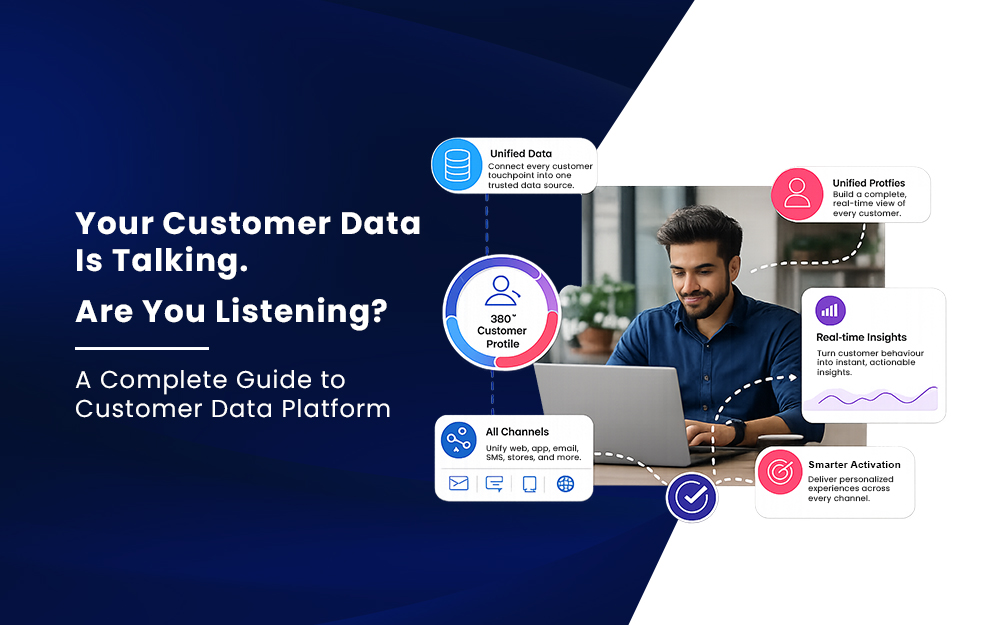
A Customer Data Platform is basically a software that pulls in raw customer data from every source you operate. Like your website, mobile app when they buy something in person your loyalty program, when they email you and even from other companies. It uses all this information to create one profile for each person. This profile is not a picture of what they are like at one moment it is always being updated.
What makes a Customer Data Platform different from tools you might be using? The information it collects does not just sit there it makes it available and actionable.
A CDP makes these complete profiles available to systems like your email program, the company that shows your ads, the tool that helps you personalize things for your customers or the system your customer support team uses. It sends them the information they need when they need it.
How does a CDP actually work?
You can think of it in three layers:
Layer 1 — Data Collection The Customer Data Platform collects information from the sources you control like your website and mobile app using tools and connections that are already built. It captures everything. Every time someone visits your website uses your app fills out a form makes a purchase or contacts your support team. No data point is siloed at this stage.
Layer 2 — Identity Resolution This is where the Customer Data Platform really does something. It takes all the signals it has collected. Like an email address from when someone checked out a device ID from an app session a loyalty card number, from when they shopped in your store. And uses them to figure out who each person is. This is called identity resolution, and it’s the step most legacy tools skip entirely.
Layer 3 — Data Activation The complete profile of each customer gets sent to the systems that need it. Your email program gets the list of people you want to send emails to. The company that shows your ads gets the list of people you want to show them to. The tablet that your store employees use shows them the history of each customer. The insight doesn’t stay locked in a database, it moves where your team needs it.

CDP vs DMP: What’s the Actual Difference?
This is really confusing. To be honest the companies that make these tools do not make it any easier.
Feature | CDP | DMP |
Primary User | Marketing & Analytics | Advertising / Media |
Data Types | First-party (all types) | Second & third-party |
Identity Resolution | Yes — cross-device & channel | Cookie-based (mostly deprecated) |
Real-Time Activation | Yes | Yes, but anonymous |
Data Persistence | Long-term profiles | Short-term (cookie lifespan) |
Requires IT? | No — marketer-friendly | Yes |
Customer View | Unified individual profile | Anonymous audience segment |
The bottom line: A DMP targets anonymous audiences with short-lived, cookie-based data. A CDP unifies all first-party customer data into persistent, individual-level profiles that power real-time personalisation at scale. One operates in the shadows of third-party data. The other gives you a foundation you actually own.
Where does a CRM fit? A CRM manages your known customer relationships — it’s for sales and support. A CDP is the data infrastructure beneath it. When connected, the CDP feeds richer, real-time behavioural data into your CRM, making every customer interaction sharper and more informed. They’re complementary, not competing.
The Forces Making CDP Non-Negotiable Right Now
Third-party cookies are gone. First-party data is now the only sustainable asset a brand owns. CDPs are the infrastructure that makes first-party data actually usable.
But there’s also a maturity shift happening. Brands that were fine batching customer segments weekly are now competing with brands personalising in real time — same session, same visit, same moment. The gap in revenue impact between those two approaches is significant and widening.
A few things are coming together:
Rising customer expectations are a deal. Customers expect you to know them because they have told you their preferences, browsed your catalogue, bought from you before. They have bought things from you before. Generic messaging feels like a breach of that history.
Data privacy regulations Laws like GDPR and India’s DPDP Act say that companies have to be careful about how they use peoples information. If you have a CDP with a way to manage what people agree to you can do all of this in one place of using a lot of different tools.
AI and personalization. Machine learning models are only as good as the data you feed them. A Customer Data Platform gives the Artificial Intelligence part of your company good, clean and up to date information, which’s what makes a recommendation engine really work which is the difference between a recommendation engine that’s genuinely useful and one that recommends products people already bought.

CDP Use-Cases: What can you actually do with a CDP?
Let’s skip the abstract and look at what teams are doing in practice:
Retail: A customer abandons a cart on mobile. The CDP recognises they opened a store loyalty app an hour later. An in-app notification fires, not a generic “you left something behind” message, but one that references the specific item, in their size, with availability at the store nearest to their registered address. That level of specificity requires a unified profile. It’s not magic — it’s data infrastructure.
Financial Services: A bank customer calls support after getting a promotional email for a product they already hold. CDP-connected support tools surface the full customer history before the agent even says hello — turning an embarrassing moment into a smooth one.
D2C Brands: A customer who buys every three months is suddenly quiet at month five. The CDP flags the anomaly, triggers a win-back campaign tailored to their purchase history, and pushes that audience to a paid social campaign simultaneously — all without a human manually building the segment.
These aren’t edge cases. They’re the baseline for brands operating with mature customer data infrastructure.
What to look for in Customer Data Platform software
Customer Data Platform Software is not all the same. Picking the wrong Customer Data Platform Software is a very expensive mistake. Here is what actually matters in Customer Data Platform Software:
- Real-time processing — Batch CDPs update profiles every few hours. Real-time CDPs update within seconds. For retail and e-commerce, the difference between those two is the difference between relevant and irrelevant messaging.
- Identity resolution quality — Ask vendors how they handle anonymous-to-known stitching. Some do it well; many do it poorly. This is the core of what a CDP does, so it deserves scrutiny.
- Native integrations — A CDP that connects to your existing stack without six months of engineering work is the practical choice. Check the connector library before committing.
- Consent and compliance management — Especially important for brands operating across India, Europe, or any market with active data protection law. Consent preferences should flow automatically into the unified profile and gate activation.
- Ease of use for non-technical teams — If your marketing team needs to raise a ticket to build a segment, the CDP is underperforming its promise. The best platforms let marketers build audiences, trigger journeys, and inspect profiles without engineering support.
A CDP is not a Silver Bullet
Worth saying clearly: a CDP doesn’t fix bad data strategy. If your source systems are inconsistent, if teams aren’t aligned on what events to track, if nobody owns data governance — a CDP will unify that mess at scale. Garbage in, garbage out, just faster.
The most successful CDP implementations start with data audits, not software purchases. Know what data you collect, where it lives, how clean it is, and what activation use cases you’re actually trying to enable. Then choose the platform.
Introducing Zence 360: A CDP Built for Modern Retail Brands
If you’re looking for a CDP that was built with retail, D2C, and consumer brands in mind, Zence 360 is worth a close look. It’s the customer data platform layer within Zence CRM — designed to eliminate data silos, build a Single View of Customer (SVoC), and put that intelligence to work across every channel your team touches.
Here’s what sets it apart:
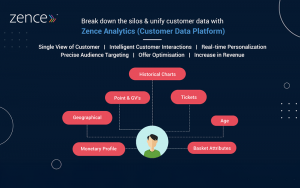
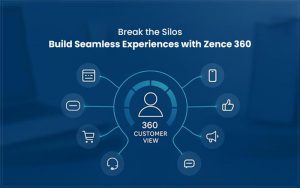
- No more data silos — Single View of Customer (SVoC). Zence 360 collects first-party data across online and offline channels — your mobile app, website, SMS, loyalty programme, and in-store interactions — and unifies them into one continuously updated customer profile. The fragmented data problem your teams know too well gets solved at the infrastructure level.
- Insight-powered marketing and personalisation. The platform analyses customer behaviour and builds identity graphs that help marketers plot accurate, targeted strategies. Automated segmentation means your team spends less time building lists and more time acting on them.
- 100+ native integrations. Zence 360 connects with your existing tech stack through over 100 pre-built integrations and developer-friendly tools, so you’re not starting from scratch or waiting months for engineering to wire things together.
- Loyalty that goes beyond points. By connecting CDP-level customer insights to your loyalty programme, Zence helps brands move beyond transactional rewards toward genuinely personalised experiences — the kind that builds long-term retention, not just repeat purchases.
- Built-in compliance with India’s DPDP Act. Privacy is not an afterthought in Zence 360. Consent management is embedded directly into the platform, so customer preferences propagate automatically across every connected tool — reducing compliance risk without requiring your team to coordinate manually across systems.
Zence 360 is trusted by leading retail brands across fashion, F&B, footwear, and D2C — including names like Levi’s, Pepe Jeans, Bata, Skechers, and Soch. It’s ISO/IEC 27001:2013 and PCI-DSS certified, and is used by brands operating across multiple countries and thousands of stores.
Frequently Asked Question
A CDP is software that collects customer data from all your tools and channels, merges it into one profile per person, and makes that profile available to every system you use for marketing, sales, or service.
A CRM manages known customer relationships — primarily for sales and support. A CDP unifies all customer data, including anonymous behaviour and offline interactions, and is designed for marketing activation at scale. The two tools are complementary, not competing.
Yes, if you’re running multichannel marketing. Your CRM has information about who your customers are. Your CDP knows what your customers are doing on all the channels and touchpoints you use.
This information helps you understand your customers better and personalize the way you interact with them which’s more, than just managing their contact information.
Not anymore. Modern customer data platform software — including cloud-native tools — is accessible to mid-market brands. The complexity of your use cases and the volume of data you generate are better criteria than company size alone.
A well-built CDP centralises consent preferences alongside the customer profile. When a customer opts out of a channel or purpose, that preference propagates automatically across every connected tool — reducing compliance risk and manual coordination across teams.
Final Thought
Your customers are already leaving you signals — every click, every purchase, every silence between purchases. A customer data platform is the infrastructure that turns those signals from scattered noise into a coherent picture you can actually act on.
The brands that are getting personalization right aren’t doing it with bigger budgets or smarter marketers. They’re doing it with better data infrastructure.
See how unified customer data can change what’s possible for your brand.