It’s 9:47 AM on a Tuesday. Priya has five browser tabs open.
One is the email tool, still buffering. Another is the helpdesk, where a customer is asking politely, for now — why their loyalty points vanished after a recent purchase. A third tab has the POS reporting dashboard. A fourth is a spreadsheet someone on the loyalty team maintains “just to be safe.” And the fifth, the CRM, is supposed to be where everything comes together.
It isn’t.
By 10 AM, Priya hasn’t replied. Not because she’s slow — she’s been at her desk since nine, coffee gone cold and not because she doesn’t care. She just can’t get the full story to line up. The purchase is in one tab. The support ticket is in another. The loyalty points are stuck somewhere in between, quietly broken since last week’s sync failed, and nobody caught it until the customer did.
If that sounds familiar, you’re not alone, and the issue often isn’t the team.
It happens when a growing business is still running on a tool stack that was never built to grow with it.
The problem is not any single tool
Most “best CRM” roundups won’t tell you this: the issue is rarely that one tool is bad.
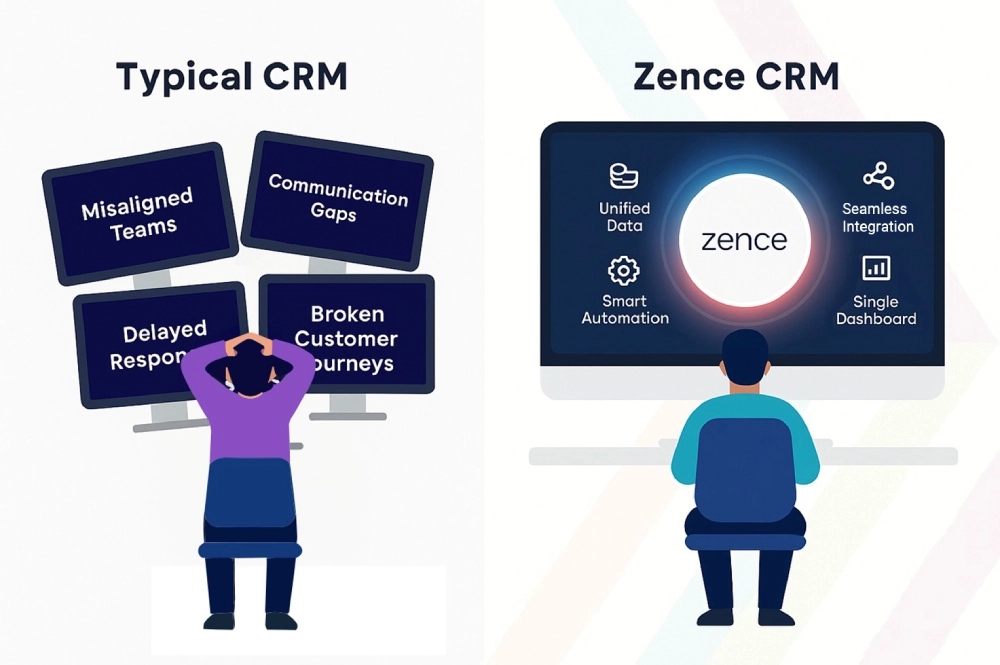
The email platform usually works fine on its own. So does the helpdesk. So does the loyalty app. The problem lives in the gaps between them.
Every time a customer moves from browsing to buying to needing help, they’re quietly handed off between systems that have no idea the others exist. On your end, that handoff looks like a data sync that didn’t run, an export sitting in someone’s downloads folder, or a “hey can you check the other dashboard?” message dropped into a group chat at 4 PM on a Friday.
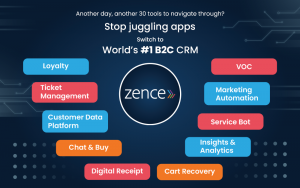
Nobody sets out to end up with seven disconnected tools. It happens one “quick fix” at a time, an email platform here, an SMS add-on there because the first one couldn’t handle it, a separate Loyalty app because the CRM version “wasn’t quite right” before launch and there wasn’t time to fix it properly. Two years later, the stack is held together with duct tape and group chats. It technically works. Barely.
Running it feels like a part-time job nobody signed up for.
What is a Unified Customer Experience Platform, really?
Let’s be straight about this, because the phrase gets thrown around a lot in pitch decks and rarely explained properly.
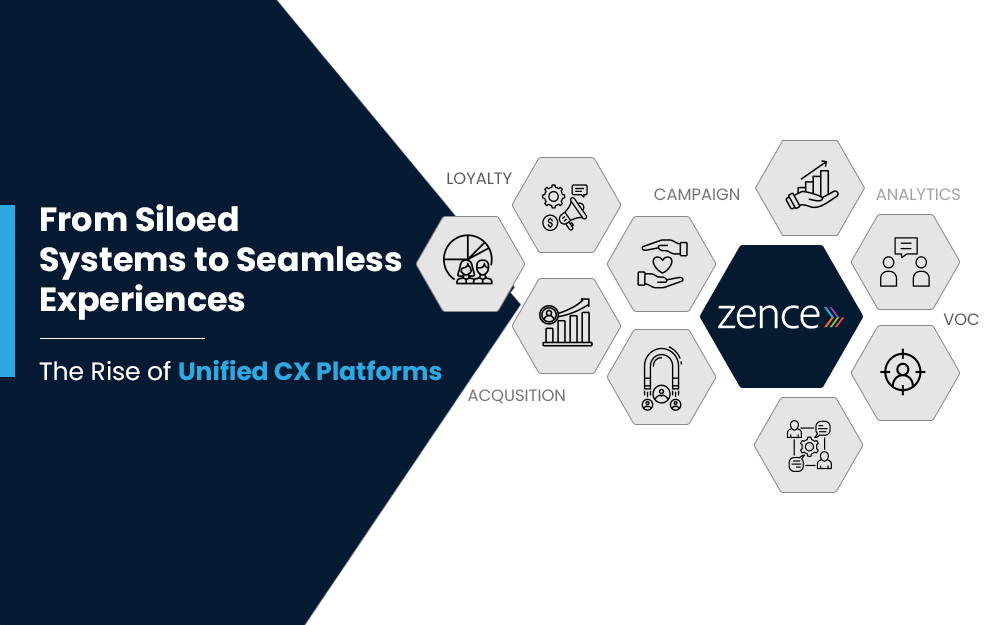
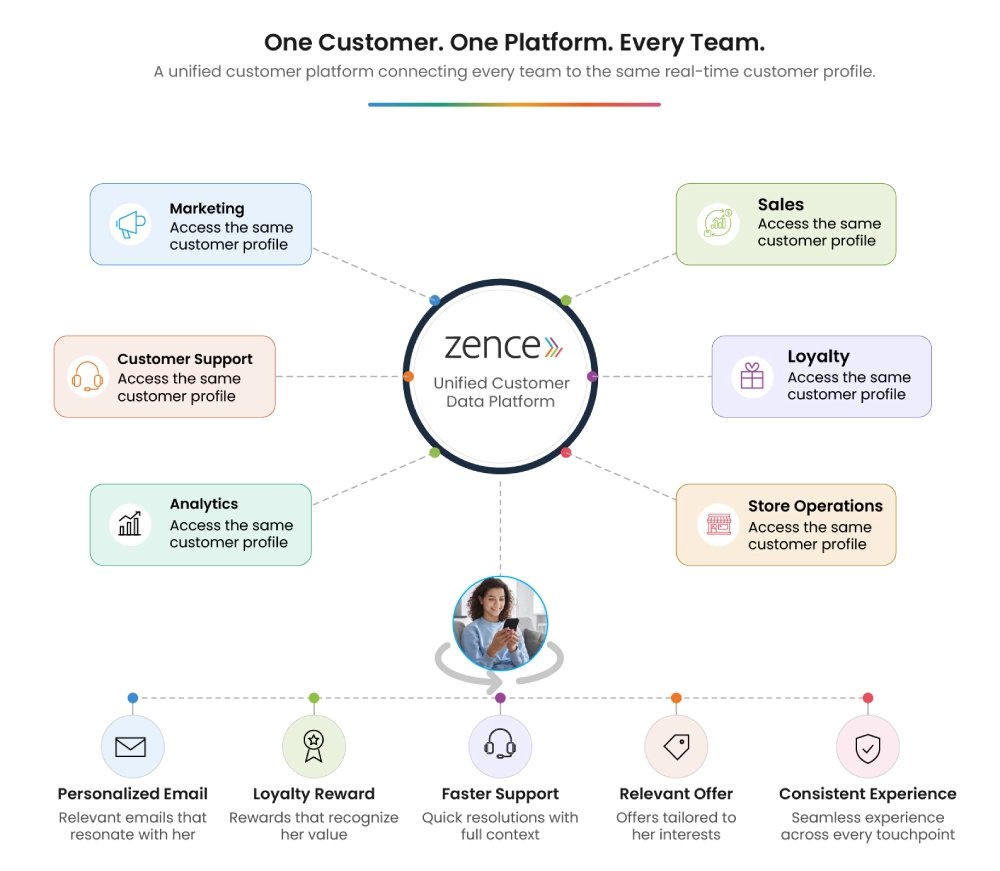
A Unified Customer Experience Platform is a connected system where customer data, Marketing Automation, service, Loyalty, and commerce tools all pull from one shared source of truth. Instead of five tools each holding a partial, slightly outdated version of a customer, there’s one profile — updated in real time — visible to every team that actually needs it.
That’s the whole idea. One version of the truth, instead of five versions that quietly disagree with each other.
Sounds like a small fix on paper, right? But pull on that thread and it touches almost everything: how the Marketing team decides who gets which Campaign, how a support call actually ends, whether the person hitting “send” on a promo does it with confidence or quietly holds their breath hoping it won’t land at the wrong moment.
The 360-degree view nobody really talks about
A customer tells you a lot about themselves without ever filling out a single form.
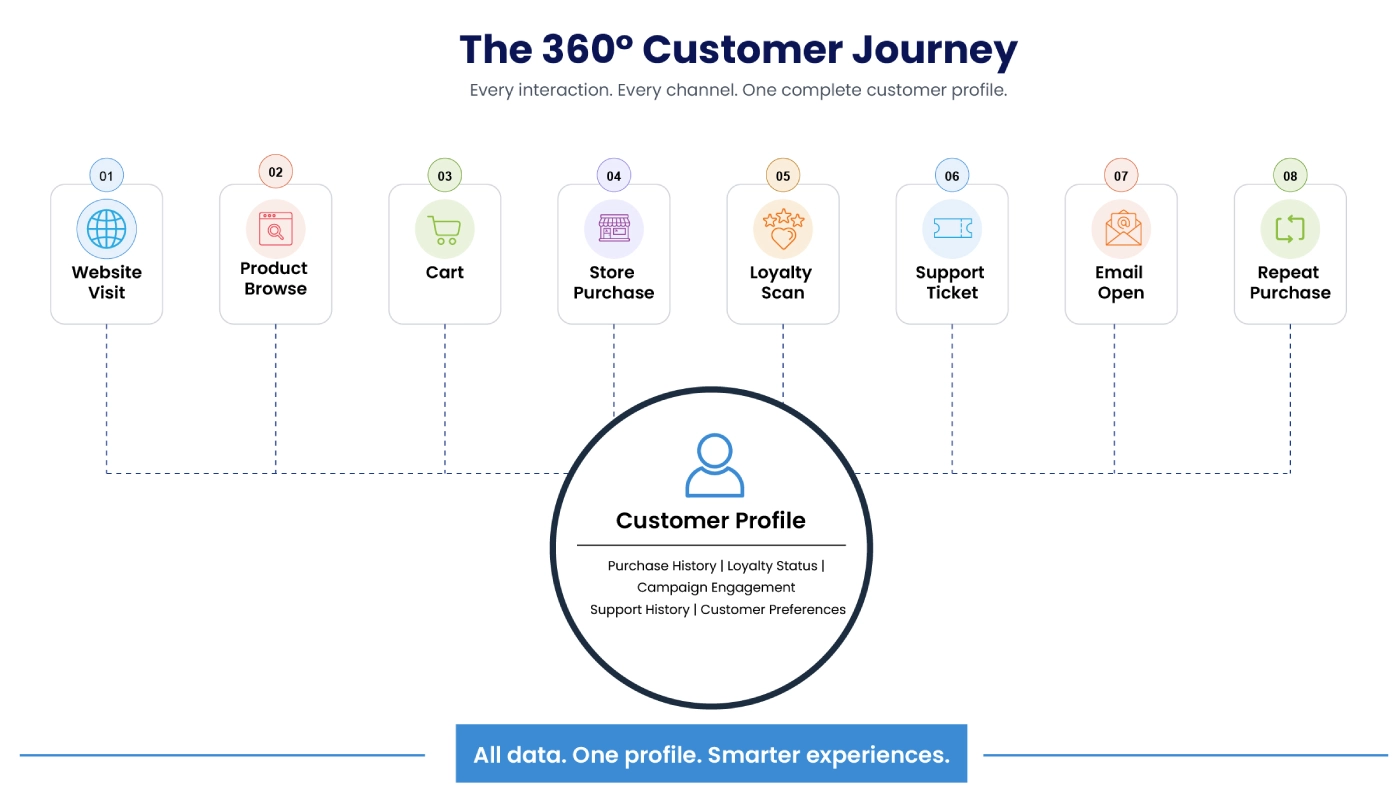
They browse a product page and leave without buying. They come back two days later, add something to cart, then abandon it again. They walk into a physical store and make a purchase. They scan a Loyalty card at checkout. They open a promotional email — or they don’t, which is its own kind of signal. Later, they call Support about a delayed delivery.
Every one of these is a data point. In a fragmented setup, each one lands in a different system, recorded by a different team, with no awareness that the others exist.
A Unified Customer Experience Platform pulls all of this into a single Customer Data Platform (CDP), building what’s called a 360-degree customer view. When Priya’s support team can see at a glance — that the customer’s loyalty points didn’t sync because of a failed transaction, without raising a ticket to “the tech team” and waiting three working days for a reply, that’s the 360-degree view quietly doing its job.
“It should not appear like one is in conversation with five different Brands while interacting via five different touchpoints. Everything should be connected,” said Soumya Chatterjee, Co-founder and CEO of Easyrewardz
When Marketing, Service, and Loyalty finally talk to each other
Here’s a scenario that plays out more often than Retailers would like to admit.
Someone buys a pair of shoes online. Three days later, they’re emailing Support: wrong size, can you fix this? Support does its job well — replacement shipped, apology sent, customer feels heard.
Then it depends. Are the systems talking to each other, or not?
If they’re not, the Marketing Automation layer, completely in the dark, fires off a chirpy “How was your shopping experience?” survey the next morning. Or worse, a promotional push for the exact same shoes: “Still thinking about it?” Awkward, at best.
In a unified setup, the Campaign Management layer can see that this customer just had a hiccup. It can pause the generic survey, or swap it for something more thoughtful — maybe a small loyalty gesture, sent automatically, because a little goodwill right now goes a long way toward keeping that person around.
Neither version takes more effort from the team. Same effort, completely different outcome. The only real difference is whether the systems are actually talking to each other across email, SMS, app notifications, and the store counter.
Which, honestly, is all “omnichannel” was ever supposed to mean — not five logos on a slide deck, just everyone being on the same page.
The Loyalty layer most Brands get wrong
Most Loyalty Programs are basically the same: spend, earn points, redeem, repeat. It works but up to a point.
But points alone don’t really build Loyalty. They build habit, and habit is fragile. The day a competitor offers slightly better points, that “loyal” customer quietly drifts off.
A Unified Customer Experience Platform lets Loyalty grow beyond pure transactions. Because the system already knows it’s someone’s birthday this week, how often they shop, what they recently complained about, and what they keep coming back to buy, Loyalty starts feeling like someone actually remembers you, not just your points balance.
A birthday message that actually arrives on the birthday. A “you’ve been with us for two years” note that feels earned, not automated. A small gesture after a service issue, sent without anyone having to manually remember to send it.
This emotional layer is genuinely hard to fake with five disconnected tools. Someone would have to cross-check four systems before every message goes out — which, realistically, isn’t happening once you’re sending thousands of messages a day.
Zence’s Loyalty layer is built to sit inside the same data ecosystem as Campaigns, Tickets, and Feedback. So when a customer’s service ticket closes, the Loyalty engine already knows. When a retention Campaign fires, it knows the customer’s Tier. The recognition feels real because the data making it possible actually is real, in one place.
What actually changes — for the business and the customer
For the customer, a unified setup mostly feels like nothing at all. And that’s the point.
No repeating their story to a third agent. No “let me transfer you to another department.” No discount email landing the morning after a complaint. Just a Brand that seems to get it, without making a big deal out of getting it.
For the business, the wins are easier to spot:

Campaigns get sharper
Segmentation is based on what people actually do, not just whether they opened an email last Tuesday.

Support gets faster
Agents see the whole history, not just the one open ticket in front of them.

Loyalty feels personal
Because the system actually has something to work with, instead of guessing from incomplete data.

Reporting stops being a midnight job
One source of truth, not five spreadsheets stitched together before a leadership meeting.
None of this requires a bigger team. It mostly requires the existing team to stop doing detective work between systems, work most people would happily never do again.
Building your unified stack — where to actually start
Here’s the honest bit: you don’t need to rip everything out and start over next week.
That kind of overnight switch creates more chaos than it solves, and most businesses can’t afford the disruption. A more realistic path tends to look like this:
Start with the data, not the tools. Get customer data — purchase history, support interactions, Loyalty activity, browsing behaviour — flowing into one Customer Data Platform first. This is the foundation everything else is built on, and it’s usually the step that gets skipped in the rush to buy new software.
Connect before you replace. Zence is designed to integrate with the POS, e-commerce, and support tools a business already uses, rather than demanding a clean-slate switch on day one. That matters a lot when a business has existing workflows and teams that depend on them.
Pick one journey and fix it first. Maybe it’s the post-purchase experience. Maybe it’s how new Loyalty members are welcomed. Don’t try to unify every journey at once — prove the value on one, and the case for the rest builds itself.
Let every team see the same data. This is less a technology step and more a habit change, but it’s often the one that creates the biggest shift in how people actually work day to day.
Back to Priya — one more time
In a unified setup, Priya’s Tuesday morning looks like this:
One screen. One customer profile. Purchase history, open support ticket, Loyalty activity — all visible together.
She doesn’t need to ask three colleagues or open four tabs. She reads the full story in about thirty seconds, writes a reply that actually solves the problem, and moves on.
Four minutes, not forty.
That’s what a Unified Customer Experience Platform actually means when you remove all the language around it. It’s not about adding more technology on top of what a business already uses. It’s about connecting the technology that already exists, so that Marketing, Service, and Loyalty are all working from the same customer story — not each holding their own incomplete piece of it.
The tools running a business shouldn’t be the reason its customers feel like strangers every time they talk to a different department.
Ditching the tool stack chaos doesn’t mean ditching the tools. It means finally getting them to work as one.