Think about the last time a loyalty program genuinely surprised you.
Not the card buried in your wallet with points you’ll never use. Not the “your rewards are expiring” email you deleted without opening. The time a brand remembered you in a way that felt personal, and made you think, I should come back here more often.
That feeling doesn’t happen by accident. It’s engineered. And the technology behind it is loyalty management software.
Most brands understand why loyalty programs matter. Retaining a customer costs a fraction of acquiring a new one. Loyal customers spend more, refer more, and forgive more. The math is well established. What’s less understood is why so many loyalty programs, despite good intentions and real budget, quietly underperform. The answer is often underneath.
This guide walks you through what loyalty management software does, which features genuinely move the needle, and why the platform you choose matters more than the program you design. If you’d rather skip straight to seeing it in action, book a demo with Zence , a leading loyalty management platform, powered by Easyrewardz.
What Is Loyalty Management Software?
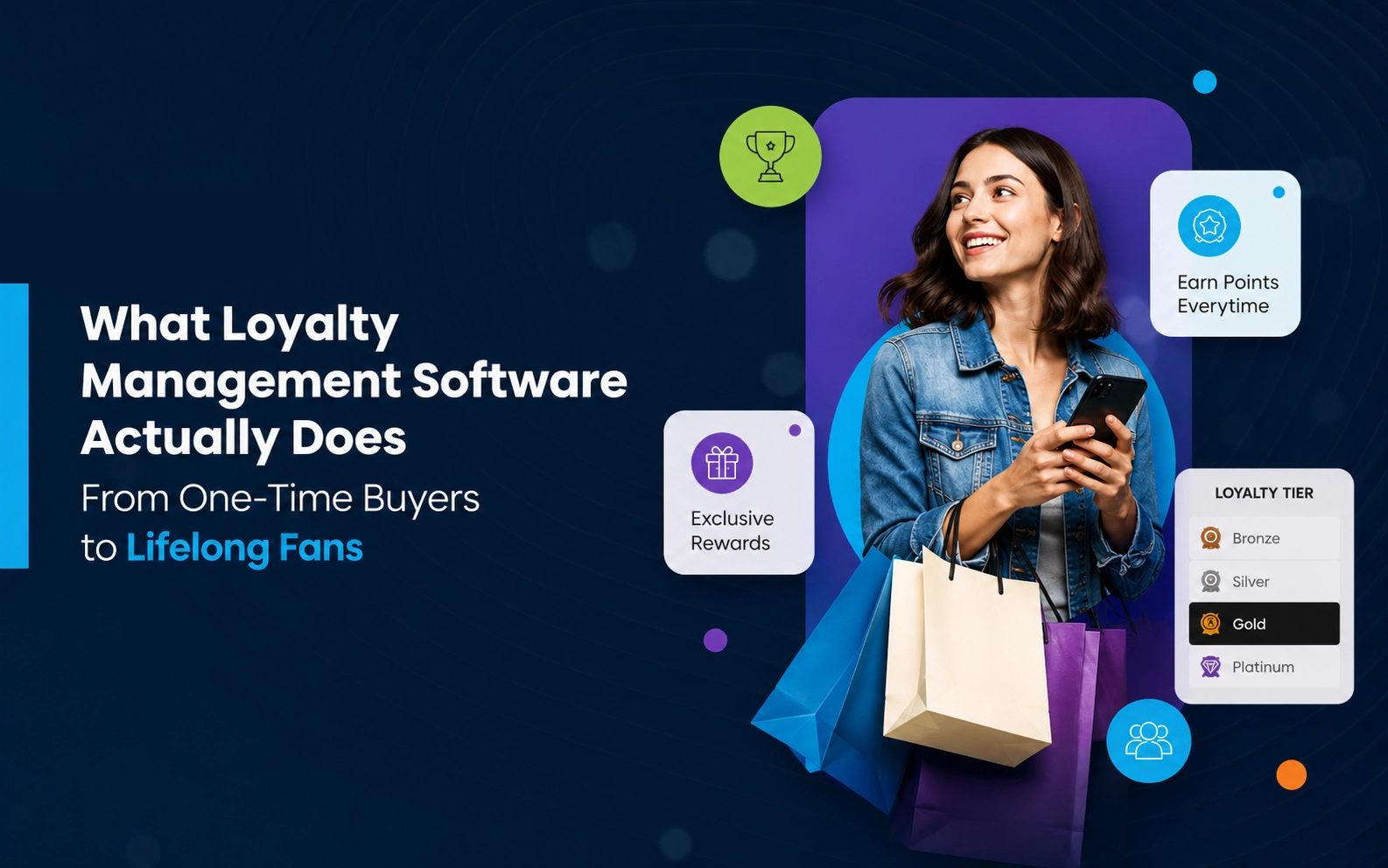
At its simplest, loyalty management software is the engine that runs your loyalty program. It handles everything from the moment a customer earns their first point to the moment they redeem a reward years later, and every interaction in between.
But the best platforms go much further than points tracking. Zence, powered by Easyrewardz, sits at the centre of a customer data ecosystem. Every purchase, referral, feedback submission, and redemption event feeds a unified customer profile, giving brands a real-time, 360° view of who their customers are and what will keep them engaged.
This is the shift that separates modern loyalty management systems from legacy tools: the move from transactional loyalty (earn points, spend points) to emotional loyalty, building genuine affinity between a customer and a brand that outlasts any competitor’s points rate.
Why Most Loyalty Programs Underperform
Before getting into features, it’s worth naming the real problem, because it shapes everything else.
Most loyalty programs don’t fail because the concept is wrong. They fail because the platform underneath can’t deliver what the strategy demands. A brand designs a personalized, tiered, gamified program and then discovers their loyalty software can only handle a flat points-per-purchase rule. So, the program gets simplified. The promise to customers gets diluted. And engagement never reaches what was planned.
Three patterns show up repeatedly:
Rewards feel generic. The platform can’t personalise by behaviour, so every customer gets the same offer regardless of purchase history or how often they visit. Customers notice and quietly disengage.
The program becomes a discount machine. Without redemption controls, customers redeem everything immediately, building no incremental loyalty. The program costs real money without driving real retention.
Data lives everywhere except where it’s needed. The loyalty platform doesn’t talk to the POS, the eCommerce site, or the CRM. The marketing team flies blind, unable to target based on loyalty behaviour or measure what’s working.
Zence Loyalty Engine, is designed to solve all three. Here’s how.
The Features That Make a Difference
A Rules Engine That Keeps Up with Your Marketing
Everything in a loyalty program flows from the rules engine, the logic that decides how points are earned, when tiers change, and what rewards fire at what moments. A weak engine locks you into one flat earn rate for every customer on every purchase. A strong one lets you set different rates by product category, store, channel, and tier simultaneously, and reward behaviour beyond just spending visits, referrals, profile completions, feedback submissions.
The difference in practice? One program feels like it was built for everyone. The other makes your best customers feel like it was built for them.
One Customer, Every Channel
Your customers browse online, buy in-store, and check their rewards on the app. They shouldn’t have to think about which channel they used, their points should just be there, wherever they are. That means every touchpoint feeding a single, real-time member profile. Points earned in-store visible on the app within seconds. Redeemable at online checkout in the same window. No nightly syncs. No confused customer at a till asking why their balance looks wrong.
It sounds like a basic expectation. It’s still surprisingly rare in platforms that weren’t built for omnichannel from the ground up.
Rewards That Feel Personal
Points are the starting point, not the whole answer. What keeps customers coming back is being rewarded in a way that feels tailored to them, and that means having multiple reward types available natively: points, coupons, e-gift vouchers, and prepaid cards, all in the same platform. Rewards that are condition-specific (triggered only on a first purchase, only after a referral, only when a customer leaves feedback). Rewards that can be locked to a particular store or tier. Rewards that can be gifted to a friend, secured via OTP.
That level of flexibility is what separates a loyalty platform from a glorified spreadsheet.

Gamification, The Part Members Actually Tell Their Friends About
Here’s the truth: A points balance is not exciting. Customers check it occasionally, redeem when convenient, and mostly forget it exists between visits.
Gamification changes the emotional texture of the whole program. When a customer spins a wheel after a purchase and wins a mystery reward, they’ve had an experience, not just a transaction. When they earn a badge on their fifth order, they feel seen. When a scratch card reveals a surprise voucher, they screenshot it and share it. That’s word-of-mouth that no ad budget can buy.
The one thing to insist on: gamification needs to be native to the loyalty engine, not a third-party integration. A spin result that takes 24 hours to show up in the member’s balance kills the moment entirely.
AI That Does the Personalisation Heavy Lifting

Here’s the scale problem every growing loyalty program eventually hits. The more customers you have, the less meaningful a manually segmented campaign becomes. Five segments, five different offers, that’s not personalisation, it’s just slightly less generic broadcasting.
Zence’s AI Orchestrator, built on the Easyrewardz intelligence layer, is how you get out of that trap. You set up one unified campaign. The engine reads each member’s purchase history, complaint patterns, preferences, and engagement score, and decides the right reward type, value, and timing for that specific person. Customer A gets a 10% coupon. Customer B gets a ₹100 gift voucher. Customer C gets 200 bonus points. All from a single rule. All in real time.
Your marketing team sets up one campaign instead of twelve. Every member feels like the offer was made just for them, because it was. And built-in budget guardrails mean personalisation at scale doesn’t become spend at scale.
Redemption Controls That Protect Your Margins
A loyalty program without guardrails will eventually become a discount scheme. Customers figure out the fastest way to earn and burn, show no incremental loyalty, and the program costs money without building retention. The fix isn’t removing rewards; it’s adding sensible controls that most members never notice.
A redemption delay that makes points usable after a short cooling period. A bill percentage cap so points can only offset a set share of the total. An annual redemption ceiling for predictable liability. A minimum balance threshold before any redemption kicks in. Used thoughtfully, these protect your margins and make the program financially sustainable over years, which is ultimately better for everyone, including the members who want the rewards to still be worth something in year three.
Referrals, Your Most Underused Acquisition Channel
A loyal customer recommending your brand to a friend is the highest-converting, lowest-cost acquisition you’ll ever get. A native referral engine captures that, rewarding both the person who referred and the person who arrived, with unique codes, tier-based reward structures, and OTP-secured redemption to keep things clean.
The more advanced implementations go further. Easyrewardz supports in-store QR-led referral journeys: a customer scans a code, picks the products they love, gets a WhatsApp link to share with friends, and earns rewards based on how many of those friends make a qualifying first purchase. It’s a flywheel, loyal customers bring in new ones, who become loyal, who bring in more.
What Good Loyalty Software Actually Delivers for Your Business
The business case for loyalty management software comes down to three things that compound over time.
Retention is cheaper than acquisition, by a lot. A customer you keep doesn’t need to be won again. Every improvement in retention rate has an outsized effect on profit because the cost of serving an existing customer is so much lower than finding a new one. A loyalty program that genuinely works is one of the highest-ROI investments a brand can make, full stop.
Your loyalty data is an asset you’ll build. Every earn event, every redemption, every referral, every feedback response, each one adds a layer to a customer profile that no third party can sell you. As privacy regulations tighten and third-party data becomes harder to access, the brands with rich first-party loyalty data will segment smarter, target better, and predict churn before it happens. Everyone else will be guessing.
The program pays for itself, when it’s built on the right platform. Here’s the honest caveat: a loyalty program with no personalisation and no controls is just a slow-burning discount scheme. A program running on Zence, with AI-powered orchestration, native gamification, and smart redemption controls, generates measurable ROI through visit frequency, basket size, and churn reduction. The difference is entirely in what the software can do.
Where Zence, Powered by Easyrewardz, Fits into All of This
Every major feature in this guide connects back to one platform: Zence Loyalty Program
Zence plays the role most loyalty programs quietly need but rarely get, it brings the moving parts together. For example, points, tiers, referrals, gift vouchers, gamified rewards, customer profiles, redemption rules, campaign triggers and reporting all work from one connected system of sitting in different tools that barely talk to each other.
Zence is built for that real-world complexity. It helps brands move beyond points and discounts to create loyalty journeys that feel more personal, timely and commercially sensible. With 250+ success stories behind the Zence platform Zence brings the experience of running loyalty at scale not just launching a program and hoping customers remember it exists.
Here’s what that translates to in practice:
- Marketers can control it. Change an earn rate, add a milestone reward, adjust tier logic, without raising a developer ticket. Zence is designed so the people running the program can run it.
- The AI does the personalization work. Zence’s AI Orchestrator automates reward decisioning for every individual member, from selecting the right reward type to enforcing spend limits. One campaign setup. No manual segment management.
- Gamification is fully connected. Spin results appear in member balances instantly. Scratch card rewards trigger communications automatically. Badges feed directly into the loyalty profile. No friction, because everything lives in the same system.
- Referrals work in-store and online. Easyrewardz built one of the first QR-led, WhatsApp-native referrals flows in Indian retail because their clients needed it and the platform was flexible enough to deliver it. That kind of depth only comes from years of solving real problems for real brands.
- It’s a platform, not a patchwork. Every component, loyalty engine, AI orchestrator, gamification, referrals, communications, analytics, sits on the same stack. No half-working integrations. No data gaps. One source of truth for every customer interaction.
The brands running on Zence aren’t just running loyalty programs. They’re running customer relationship engines, and the loyalty program is the front door.
If you want to see what that could look like for your business, the Zence team will walk you through it based on your specific program, not a generic slide deck. Book a demo →
Frequently asked questions
It’s the platform that runs your loyalty program end-to-end, automating point earning and redemption, managing member tiers and profiles, delivering personalised rewards across every channel, and measuring program ROI. Zence engages with your customers and convert them into brand advocates with the best-in-class Loyalty Program.
A CRM manages customer data and sales interactions. Loyalty software manages reward behaviour and program economics. The best implementations, like Zence, run both on the same stack, so a tier upgrade automatically triggers a personalised campaign without anyone having to do it manually.
Easyrewardz unifies every customer touchpoint, POS, eCommerce, mobile app, partner stores, under a single member profile in real time. Points earned in-store are visible and redeemable online within seconds, with no nightly batch sync required.
Zence’s AI Orchestrator takes a single campaign rule and determines the right reward type, value, and timing for each individual member, based on their purchase history, preferences, and engagement score. One setup. Personalised output for every customer. Budget guardrails built in throughout.
A standard promotion can go live within two days once the program is set up. Full program launches, including POS integration and member enrolment flows, typically take a few weeks, depending on complexity. Book a demo to get a realistic timeline for your setup.